
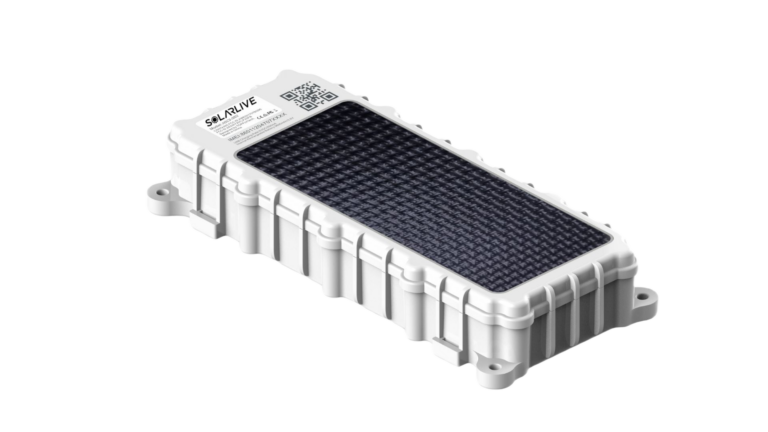


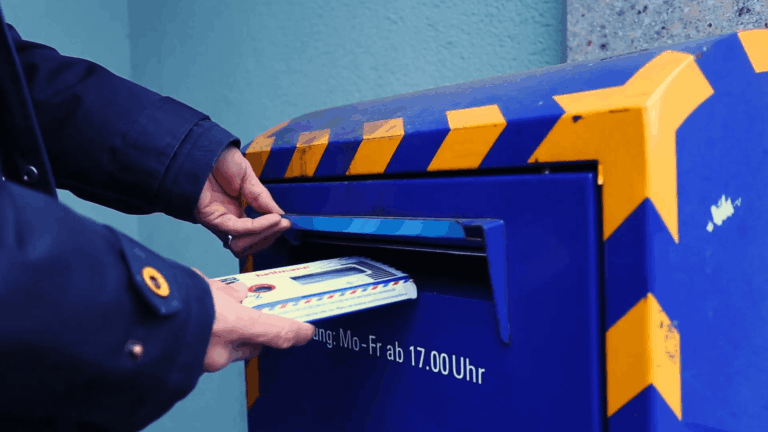











An airline-approved GPS tracker is a tracking device that an airline has cleared to travel in its aircraft with your air cargo. Without that approval, a tracker may have to be switched off or removed before loading, which leaves you blind for the flight. ParceLive, Hanhaa’s shipment tracker, is approved by IATA and more than 40 airlines, so you can follow air freight from collection to delivery anywhere in the world.
Key facts
- An airline-approved tracker has been assessed and cleared by the airline carrying it to travel in its aircraft.
- ParceLive is approved by IATA and more than 40 airlines, including British Airways, IAG Cargo and Virgin Atlantic Cargo.
- It meets RTCA/DO-160G, its battery is certified to UN38.3 and IEC 62133-2, and its case is UL 94 certified for flammability.
- It reports location, temperature, humidity, shock, light and tilt, with battery life of up to three months per charge.
Why do GPS trackers need airline approval?
A GPS tracker contains a lithium battery and a radio that transmits data. Both matter on an aircraft: batteries must be safe under the pressure and temperature changes of flight, and transmitters must not interfere with aircraft systems. Each airline therefore decides which active devices it will accept in its cargo holds, and many will only carry a tracker that has been tested and approved.
For shippers this has a practical consequence. If your tracker is not approved by the airline your forwarder books, the shipment may be delayed, the tracker may be removed, or you lose visibility at exactly the point where cargo is most often handled, stored and transferred.
What standards should an air cargo tracker meet?
These are the certifications ParceLive holds, as listed on our compliance page. They are a useful checklist when comparing any air cargo tracker.
| Standard | What it covers |
|---|---|
| RTCA/DO-160G | Environmental testing for equipment carried on aircraft |
| UN38.3 | Safe transport of lithium batteries |
| IEC 62133-2 | Safety of rechargeable lithium cells and batteries |
| UL 94 | Flammability of the plastic case |
| CE (Radio Equipment Directive 2014/53/EU) | Radio equipment conformity in Europe |
| RoHS | Restriction of hazardous substances in electronics |
| ISO 9001 | Quality-managed manufacturing facility |
Which airlines have approved ParceLive?
ParceLive is approved by more than 40 airlines. See the full list on our airline approvals page. They include:
- UK: British Airways, IAG Cargo and Virgin Atlantic Cargo.
- Europe: Air France, KLM, Martinair, Lufthansa, Austrian Airlines, Swiss WorldCargo, TAP Air Cargo, ITA Airways, Condor, Icelandair Cargo, Cargolux and Turkish Airlines.
- North America: American Airlines, Delta, United Airlines, Air Canada, Atlas Air and UPS Airlines.
- Middle East and Asia: Etihad Cargo, Qatar Airways, Japan Airlines, Korean Air, Asiana Airlines, Cathay Pacific, Singapore Airlines Cargo and MASkargo.
With this many approvals, the airline your forwarder chooses is very likely to be on the list, so you do not need to change how you book air freight.
Tracking air cargo on any route
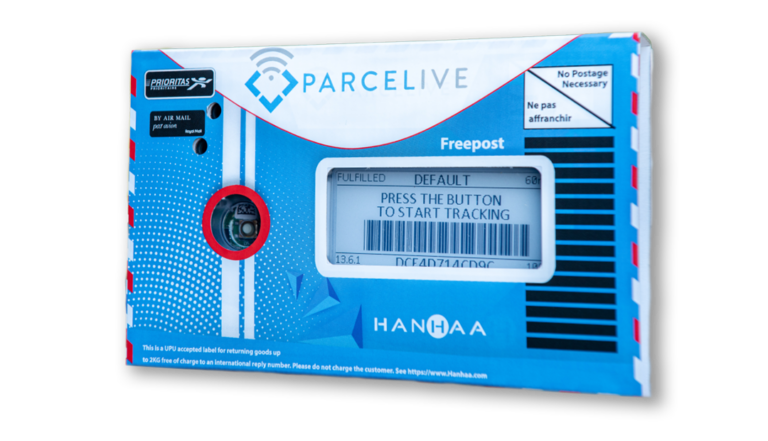
Hanhaa’s customers ship all over the world. Airline approval means a tracker can go in with the consignment at origin and keep reporting through export handling, the flight, transfers at hub airports and final delivery, wherever the shipment starts and ends.
Shippers of medicines, aerospace and automotive parts, electronics and luxury goods need condition data as much as location. ParceLive measures:
- Temperature from -15°C to +50°C, accurate to ±0.5°C between 15°C and 40°C.
- Humidity from 0 to 100% relative humidity, accurate to ±3.5% RH.
- Shock between 2 g and 16 g, and freefall of more than 0.4 seconds.
- Tilt beyond 30 degrees, and orientation changes beyond 45 degrees.
- Light above 4.0 lux, showing when a package has been opened.
You set the limits for each shipment, and The Hub alerts you as soon as one is crossed. See the full tracker specifications.
Following every shipment in The Hub
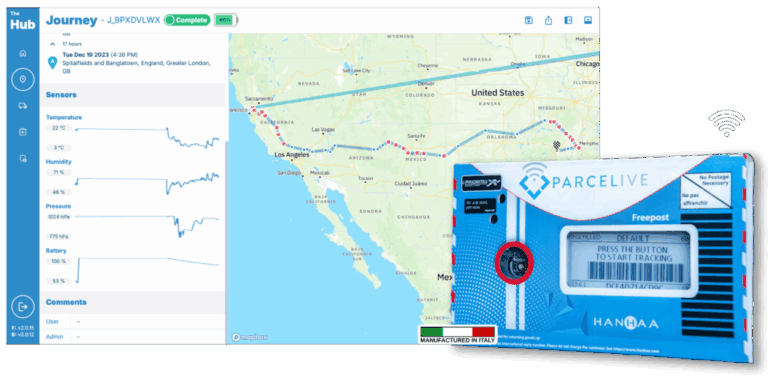
From the moment a shipment is collected, The Hub shows it on a live map with its latest sensor readings. You can share tracking links with customers and partners, export data, and send location, sensor readings and alerts into your TMS, ERP or WMS through our API. Because the tracker travels inside the consignment, it keeps reporting when the shipment moves between airlines, handlers and road hauliers.
At the end of the journey, trackers can be returned free through the postal network in supported countries and reused. The trackers are owned by Hanhaa and rented for each journey, so they hold no commercial value, and customs declarations that mention ParceLive should reflect that.
How to choose a tracker for air freight
- Check airline approvals first. Ask which airlines have approved the device, and compare that with the carriers your forwarders use.
- Ask for the certificates. Look for DO-160G testing and UN38.3 battery certification as a minimum.
- Decide what you need to measure. Location alone rarely explains damage or spoilage. Temperature, shock and light data usually do.
- Check battery life against your longest route. ParceLive lasts from a few days up to three months per charge, depending on how often it reports.
- Plan the return. Reusable trackers with free returns keep the cost per shipment low.
About Hanhaa
Hanhaa has offices in London, at Pennine Place, 2A Charing Cross Road, London WC2H 0HF, and in Porto, Portugal, at UPTEC Asprela 1, Rua Alfredo Allen 455, 4200-135 Porto. Our trackers follow customers’ shipments across air, sea and road worldwide.
Read more about global supply chain visibility software, tracking high-value shipments and cold chain monitoring.
Frequently asked questions
What is an airline-approved GPS tracker?
It is a tracking device that an airline has assessed and cleared to travel in its aircraft with cargo. ParceLive, from Hanhaa, is approved by IATA and more than 40 airlines.
Can I put a GPS tracker in air cargo?
Airlines set their own rules for active devices such as trackers, and many only accept devices they have approved. Check that your tracker is approved by the airline carrying the shipment. ParceLive is approved by more than 40 airlines, including British Airways, IAG Cargo and Virgin Atlantic Cargo.
Which certifications does ParceLive have?
ParceLive meets RTCA/DO-160G, its battery is certified to UN38.3 and IEC 62133-2, its case is UL 94 certified for flammability, it carries CE and RoHS conformity, and it is made in an ISO 9001 facility.
Do I need to declare a ParceLive tracker for customs?
ParceLive trackers are owned by Hanhaa, rented for each journey and returned afterwards, so they hold no commercial value. Any customs declaration that mentions ParceLive should reflect this.
How long does the battery last on a long-haul shipment?
From a few days up to three months per charge, depending on how often the tracker is set to report.
Where is Hanhaa based?
Hanhaa has offices in London, UK (Pennine Place, 2A Charing Cross Road, WC2H 0HF) and Porto, Portugal (UPTEC Asprela 1, Rua Alfredo Allen 455, 4200-135 Porto), and tracks shipments for customers worldwide.
Have a question?
Ask us about any of our products and services, or try ParceLive on your own shipments.